- Powering the Nation Faster Than Ever
- Call Us:880 1755 626 006

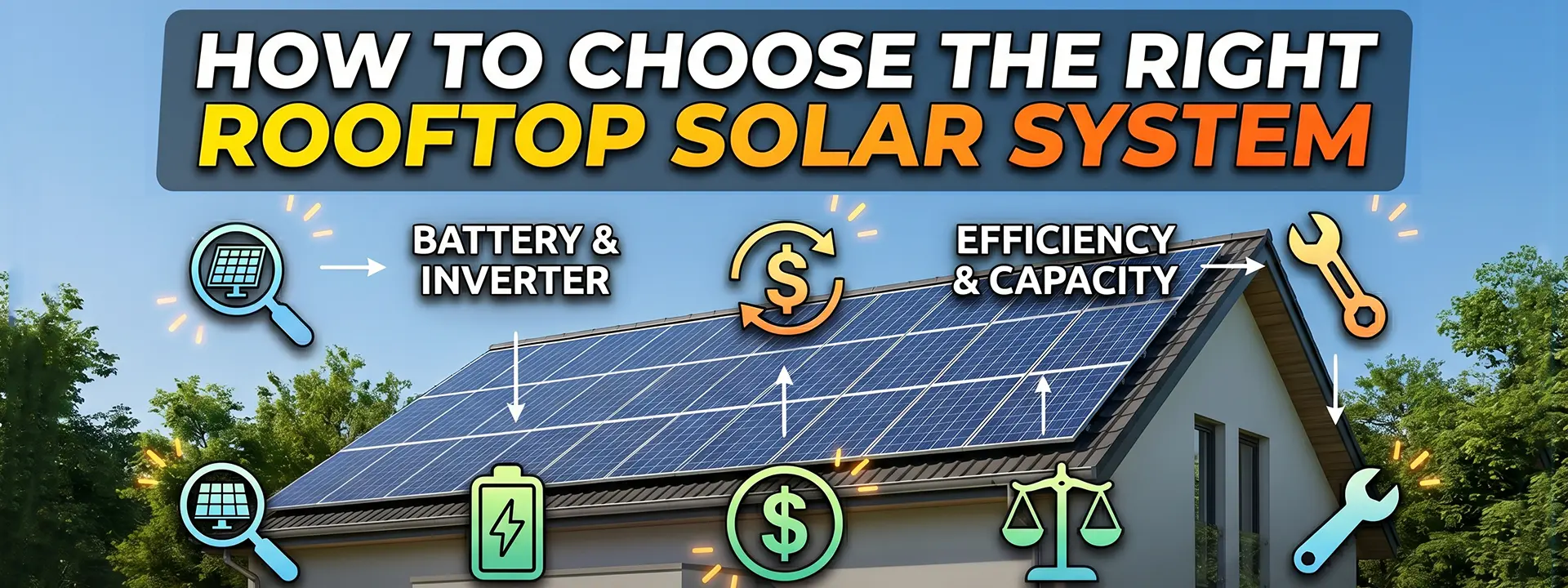
How to Choose the Right Rooftop Solar System
How to Choose the Right Rooftop Solar System
Rooftop solar is no longer only a “future energy” discussion in Bangladesh. Day by day, it is becoming a practical solution that reduces electricity costs for homes, offices, factories, and commercial buildings. It also improves long-term energy planning .
But choosing the right rooftop solar system is where most people get confused.
Many buyers start by asking :
- “How many panels do I need?”
- “What is the price per kW?”
- “Which brand is best?”
In reality, the better question is:
“Which solar system is best for my building and electricity usage ?”
The right solar system is not always the biggest or the cheapest one. It depends on multiple factors such as load, roof condition, budget, and long-term goals.
Start With Electricity Usage, Not Panel Quantity
One of the most common mistakes is choosing a system size before understanding actual electricity usage.
A rooftop solar system should be planned based on :
- daytime electricity consumption
- monthly electricity bill
- backup requirements
- future expansion plans
For example, a factory running machines during daytime will use solar differently from a residential building where most electricity is used at night.
This is why load analysis matters first. Without proper load understanding, the system can become oversized or undersized.
At Edison Power, rooftop solar planning should begin with understanding the building’s real operational requirement, not just roof size.
Understand Which System Type Fits Your Need
Not every building needs the same type of solar system.
On-Grid Solar System
An on-grid system initiates utility electricity and does not require any batteries. It is a cost-effective option for buildings with stable grid access.
Best suited for :
- offices
- factories
- commercial buildings
- urban residential projects
Off-Grid Solar System
Off-grid systems operate independently and use battery storage. These systems are more expensive than on-grid systems. It works well in areas where electricity access is unstable.
Best suited for :
- remote locations
- backup-critical operations
- areas with unstable grid supply
Hybrid Solar System
Hybrid systems combine grid connection with battery backup. They offer flexibility but also increase system cost.
Best suited for :
- buildings needing backup support
- critical operations
- commercial facilities with outage concerns
If you are comparing different system types, this guide can help you understand the key differences : On-Grid vs Off-Grid Solar in Bangladesh.
Roof Space Matters More Than Many People Think
Solar performance depends heavily on usable roof condition.
Before selecting a system, it is important to evaluate :
- available roof space
- shading from nearby structures
- roof direction and sunlight exposure
- structural strength
- future roof usage
A large roof with heavy shading may produce less energy than a smaller roof with clear sunlight exposure.
This is why rooftop assessment is part of proper solar planning.
Do Not Compare Systems Only by Price
Many buyers focus only on finding the lowest quotation. That often creates long-term problems.
A lower-cost system may include :
- weaker inverter quality
- lower panel efficiency
- poor mounting structure
- limited protection system
- weak installation quality
Solar is a long-term energy system. A poor design may reduce savings even if the upfront price looks attractive.
If your focus is only cost comparison, you should also review the full Rooftop Solar Panel Cost in Bangladesh guide before making a decision.
Commercial and Residential Systems Are Different
The same planning does not work for both residential & commercial rooftop solar systems.
Residential Rooftop Solar
Usually focused on :
- reducing household electricity bills
- supporting daytime usage
- improving long-term savings
Commercial Rooftop Solar
Commercial systems are often larger and designed around :
- operational electricity demand
- daytime business activity
- long-term energy cost reduction
Factories, offices, warehouses, and institutions often benefit more because their power usage matches solar generation hours.
Maintenance Should Be Part of the Decision
Most people think rooftop solar doesn’t require maintenance. Maintenance directly affects long-term performance.
Without maintenance :
- dust reduces output
- inverter issues affect generation
- loose connections create efficiency loss
Basic maintenance includes :
- panel cleaning
- inverter inspection
- wiring checks
- performance monitoring
For commercial systems especially, maintenance planning should be considered from the beginning.
Questions You Should Ask Before Choosing a Solar System
You should consider these questions before making a final decision :
- How much electricity do we use during daytime?
- Is the roof suitable for solar?
- Do we need backup during outages?
- Is the goal bill reduction or backup support?
- Will electricity demand increase later?
- What level of maintenance support is available?
These questions help prevent poor system planning.
Common Mistakes Buyers Make
Buyers mostly make these common mistakes :
- choosing system size without load analysis
- comparing only panel price
- ignoring inverter quality
- not checking roof feasibility
- skipping maintenance planning
- selecting systems based only on short-term budget
A rooftop solar system should be evaluated as a long-term investment, not just an installation expense.
How Edison Power Approaches Rooftop Solar Planning
At Edison Power, rooftop solar planning should focus on practicality and long-term performance.
The process should include :
- electricity usage review
- roof assessment
- system type selection
- ROI estimation
- installation feasibility
- maintenance consideration
Because the goal is not simply installing panels. The goal is building a system that performs reliably for years.
Final Thought
Choosing the right rooftop solar system is not about finding the biggest system or the cheapest quotation.
It is about choosing a system that :
- matches the building’s electricity usage
- fits the roof properly
- supports long-term savings
- remains reliable over time
When rooftop solar is planned correctly, it becomes more than an energy upgrade. This makes it a part of long-term operational planning.
Frequently Asked Questions
Q. How do I choose the right rooftop solar system?
A: It starts with the electricity usage, roof condition, and system purpose. Proper load analysis is more important than panel quantity alone.
Q. Which rooftop solar system is best for commercial buildings?
A: On-grid systems are best for commercial buildings with stable grid access and high daytime electricity usage.
Q. Does roof condition affect solar system performance?
A: Yes. Shading, roof direction, usable area, and structure strength all affect performance.
Q. Is rooftop solar maintenance important?
A: Yes, regular maintenance is important for long-term efficiency.
Q. Should I compare systems only by price?
A: No. System quality, inverter performance, installation quality, and maintenance support are equally important.
Call to Action
Edison Power ensures reliability and energy efficiency for every industrial project.
Contact our expert team today for specifications, load analysis, or a quotation.
Hotline: +880 1755 626006 |✉ power_info@edison-bd.com