- Powering the Nation Faster Than Ever
- Call Us:880 1755 626 006

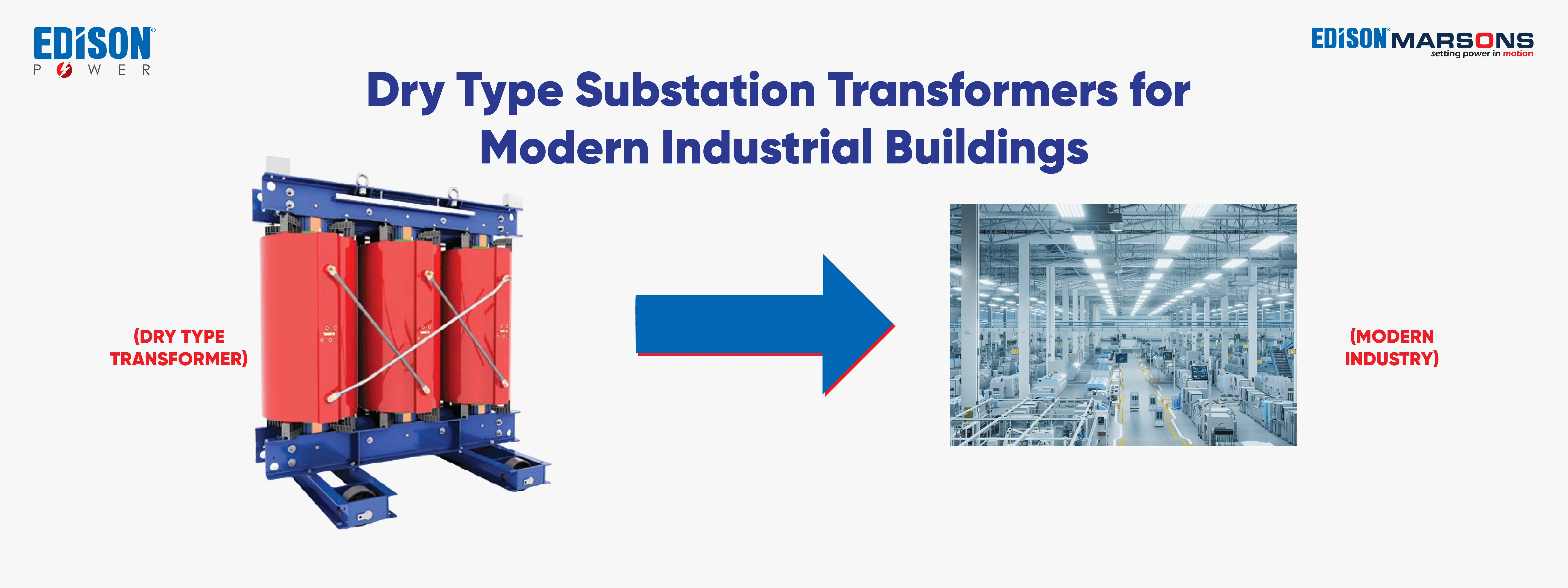
Dry Type Substation Transformers for Modern Industrial Buildings
As industrial buildings in Bangladesh become more complex, vertical, and safety-regulated, power distribution design has evolved significantly. Nowadays, modern factories, shopping complexes, data-driven facilities, and institutional buildings don’t treat substations as isolated outdoor units.Substations are now installed inside buildings which are closer to load centers maintaining strict fire safety, and environmental standards.
The use of dry type substation transformers are now rapidly increasing specially in modern industrial buildings where space efficiency, safety and low maintenance cost are essential. Instead of buying traditional oil-filled transformers, people are buying dry type units which are designed to operate reliably indoors without any kind of fire & environmental risk.
This article explains why dry type substation transformers are becoming the preferred choice, how they work in modern industrial buildings, and what facility engineers should consider when specifying them for new or upgraded substations.
What Is a Dry Type Substation Transformer?
A transformer which is designed to operate without liquid insulation. Instead of oil, it uses air, epoxy resin, or cast resin insulation to electrically isolate and protect its windings. The transformer does not require oil pits, bund walls or complex fire suppression systems as there is no oil.
In a substation context, dry type transformers are typically installed:
- Inside electrical rooms
- Within factory buildings
- In basements or utility floors
- Near load centers for efficient distribution
Their construction makes them especially suitable for indoor substations where safety and compliance are priorities.
Why Modern Industrial Buildings Prefer Dry Type Substation Transformers
Industrial buildings today are no longer simple sheds with external power yards. Many facilities now include:
- Multi-floor production units
- Enclosed control rooms
- Sensitive automation equipment
- Fire-rated architectural designs
In such environments, oil-filled transformers introduce unnecessary risk and design complexity. Dry type transformers solve several challenges simultaneously.
Key Reasons for Adoption
- Oil-free → no fire or leakage risk
- Compact design → easier indoor placement
- Minimal maintenance → lower operational disruption
- Cleaner operation → no contamination concerns
- Easier regulatory approval for indoor substations
For facility engineers and developers, these advantages translate directly into simpler design, lower risk, and predictable long-term performance.
Fire Safety: A Critical Advantage
Fire safety is the single biggest reason dry type transformers are chosen for indoor substations. Due to the presence of flammable liquid, oil type transformers can cause ignition risk under fault conditions. This is the advantage of dry type transformers as they are suitable for inside buildings maintaining fire safety and environmental risk.
Dry type substation transformers, especially cast resin models, are:
- Self-extinguishing
- Non-dripping under fire conditions
- Low smoke emitting
- Halogen-free in many designs
This makes them ideal for industrial buildings where human occupancy, machinery, or sensitive materials are present.
Indoor Installation Without Compromise
Dry type transformers are engineered specifically for indoor installation. They do not require:
- Oil containment pits
- Fire walls or blast barriers
- Advanced drainage systems
They can be installed within standard electrical rooms, provided ventilation and clearance guidelines are followed. This allows substations to stay closer to load centers. It reduces cable length, voltage drop, and power loss.
In modern industrial buildings, this design flexibility is a major advantage.
Performance in Bangladesh’s Industrial Environment
Bangladesh presents challenging operating conditions for electrical equipment:
- High humidity
- Dust-laden air
- High ambient temperatures
- Continuous load cycles
Cast resin designs of dry type substation transformers perform exceptionally good under these conditions. Resin-coated windings resist moisture absorption and maintain dielectric strength even in poorly ventilated spaces.
For indoor substations where environmental control is limited, dry type transformers offer greater reliability and longer insulation life.
Typical Capacity Range for Industrial Substations
In modern industrial buildings, dry type substation transformers are most commonly specified in the 1000–1600 kVA range. This range offers the best balance between capacity, footprint, and efficiency for:
- Large manufacturing plants
- Textile and garment factories
- Commercial complexes
- Universities and hospitals
- Data centers and logistics facilities
Transformers in this range can support heavy machinery while remaining compact enough for indoor installation.
Energy Efficiency and Load Behavior
Dry type transformers are designed to operate efficiently under partial and variable loads, which is common in industrial buildings where machinery does not always run at full capacity.
Key efficiency advantages include:
- Lower no-load losses compared to oversized oil units
- Stable voltage regulation under fluctuating loads
- Reduced thermal stress on windings
When correctly sized, dry type substation transformers operate optimally at 60–80% load, which improves efficiency and extends service life.
Maintenance and Lifecycle Cost
One of the strongest arguments for dry type substation transformers is their low maintenance requirement. Without oil, there is no need for:
- Oil testing or filtration
- Moisture monitoring
- Leak detection
- Environmental remediation
Routine maintenance typically includes visual inspection, thermal scanning, and cleaning of air passages. Over a 20–30 year lifespan, this results in lower operating cost and fewer unplanned shutdowns.
For facility managers responsible for uptime, this predictability is extremely valuable.
Design Considerations for Facility Engineers
When specifying a dry type substation transformer for an industrial building, engineers should consider:
- Load profile and diversity factor
- Future expansion margin
- Ventilation and heat dissipation
- Short-circuit withstand capability
- Harmonic content (VFDs, automation loads)
Proper specification ensures the transformer operates reliably and meets both current and future demand.
Dry Type vs Oil Type in Industrial Substations
While oil type transformers still dominate outdoor utility substations, the trend inside industrial buildings is clear. Dry type transformers reduce risk, simplify design, and align with modern safety standards.
Oil type transformers remain suitable for:
- Outdoor substations
- Utility-scale installations
- Very high-capacity systems
But for indoor industrial substations, dry type transformers have become the preferred standard.
Why Developers and EPC Firms Are Specifying Dry Type Transformers
Developers and EPC contractors increasingly specify dry type substation transformers because they:
- Simplify approval with fire authorities
- Reduce insurance and safety compliance complexity
- Improve building design flexibility
- Lower long-term maintenance obligations
In competitive industrial projects, these advantages directly impact project timelines and operational risk.
Frequently Asked Questions
Q. What is a dry type substation transformer?
A: It is a transformer that uses air or resin insulation instead of oil, designed for safe indoor substation installation.
Q. Why are dry type transformers used in industrial buildings?
A: They eliminate fire risk, require less maintenance, and can be installed indoors without oil containment systems.
Q. Which capacity range is common for indoor substations?
A: 1000-1600 kVA dry type transformer in common for indoor substations.
Q. Are dry type transformers suitable for Bangladeshi climate?
A: Yes. Cast resin dry type transformers resist humidity, dust, and temperature variation effectively.
Q. Do dry type transformers cost more?
A: They usually cost more upfront, but offer lower lifetime cost due to reduced maintenance and safety infrastructure.
Q. Can dry type transformers handle heavy industrial loads?
A: Yes, when correctly sized and ventilated, they handle heavy and variable loads reliably.
Final Perspective
Modern industrial buildings need power systems which are safe, efficient, and environment-friendly. Dry type substation transformers fulfill these conditions by providing fire safety, indoor suitability, and also ensuring low maintenance cost. For facility engineers and developers in Bangladesh, they represent not just a technical upgrade—but a smarter, lower-risk approach to power distribution.